- Mar 29
The Legend of Kiyohime: Love, Obsession, and Transformation
- Chani Japan
- 1 comment
If you visit Dōjō-ji in Wakayama, you’re not just stepping into an old temple — you’re walking into one of Japan’s most dramatic and unsettling legends.
The story of Kiyohime has been told for centuries through theatre, scrolls, and folklore. It’s not a gentle tale. It’s about desire turning into obsession… and what happens when that obsession isn’t returned.
The Story
Kiyohime was the daughter of a wealthy family who lived near Dōjō-ji. One day, a travelling monk named Anchin passed through the area. He stayed with her family, and during that time, Kiyohime became deeply attached to him.
Depending on the version, Anchin either led her on slightly or simply accepted her kindness without understanding her feelings. But when it came time for him to leave — he could not return her affection.
Kiyohime refused to accept that.
He left to continue his journey. Sensing that her feelings were strong, he tried avoiding her to make a fast exit.
She chased after him as he fled toward Dōjō-ji. In some versions, he promises to meet her again just to escape, but then runs anyway. That betrayal is what breaks something in her.
As he tries to escape her feelings, he comes across a large river and believed if he crossed the river he would be able to get away.
As she pursues him, her emotions spiral — love, anger, humiliation. Kiyohime also crosses the river blinded by her feelings. The feelings have now spiralled so far out of control she transforms into a giant serpent.
The Bell
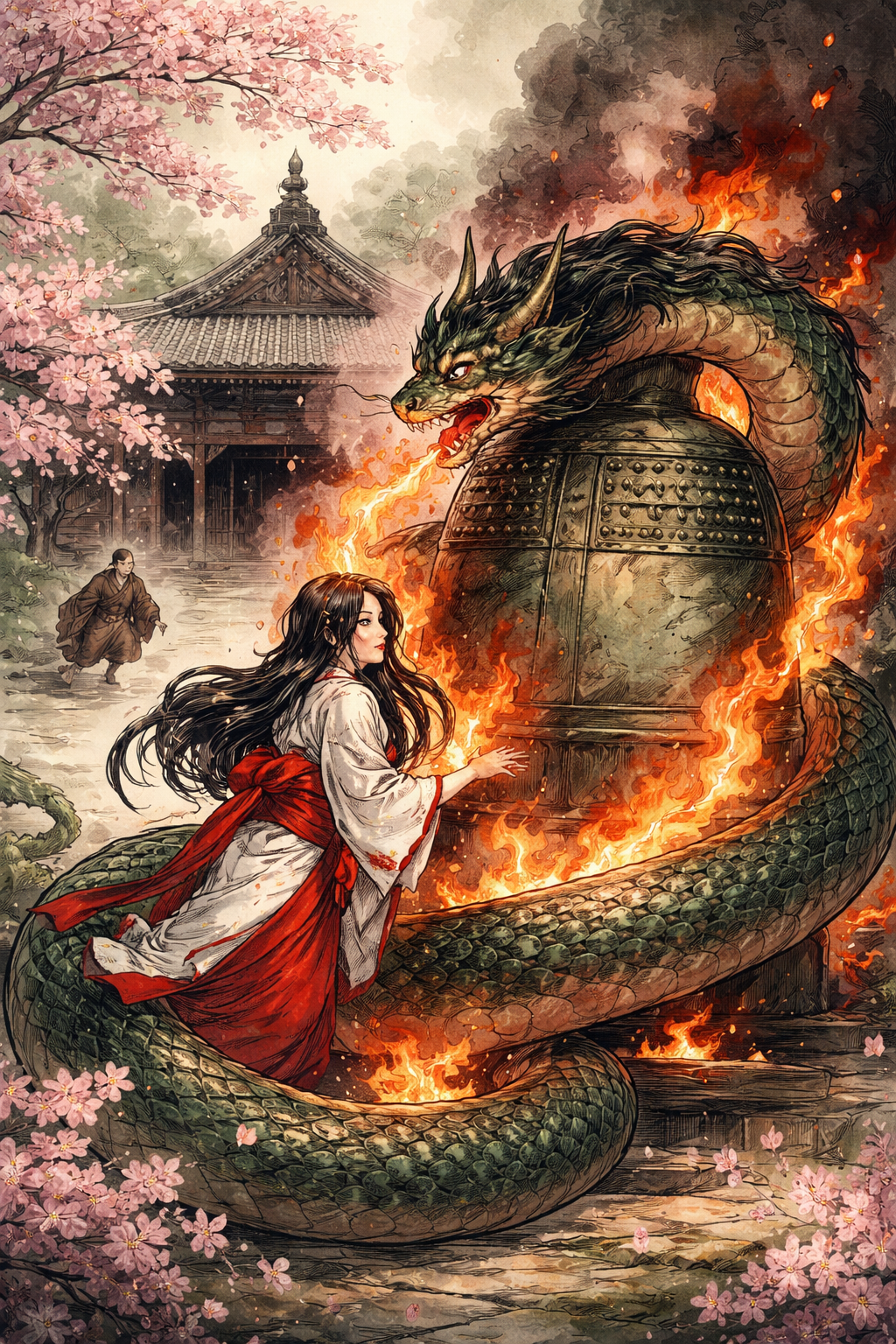
Anchin reaches Dōjō-ji temple first and begs the monks for help. They hide him under the great temple bell.
But Kiyohime finds him.
In her serpent form, she coils herself around the bell and breathes fire, heating the metal until it glows. Inside, Anchin is burned alive.
It’s one of the most intense endings in Japanese folklore. Brutal and final.
Why This Story Still Matters
This isn’t just a ghost story or a cautionary tale. It’s a story about emotional extremes — what happens when feelings are suppressed, misunderstood, or rejected without care.
Kiyohime isn’t written as purely evil. She’s human first. Her transformation into a serpent reflects something deeper: how overwhelming emotion can distort identity.
Anchin, the monk, also represents leading on Kiyohime and not being clear with her about his lack of interest from the beginning. He also runs away from the issue, instead of dealing with it before leaving.
The legend has been retold in forms like Noh and Kabuki theatre for generations, especially in the famous play “Dōjōji,” where the focus shifts between fear, sorrow, and even sympathy.
Visiting Dōjō-ji Today
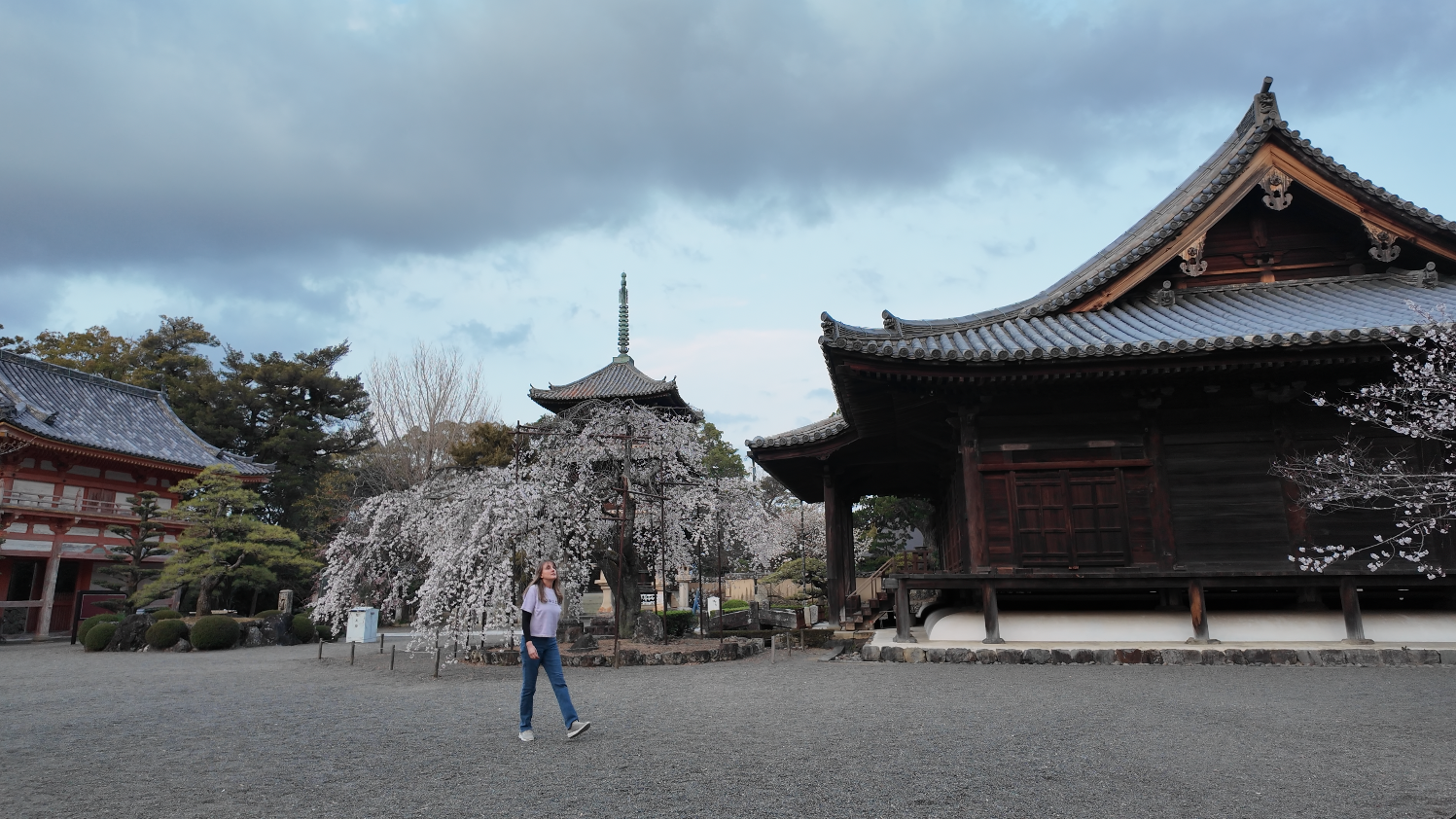
Standing at Dōjō-ji now, especially during cherry blossom season, it’s quiet. Peaceful. Almost impossible to reconcile with the violence of the story tied to it.
That contrast is what makes it stick.
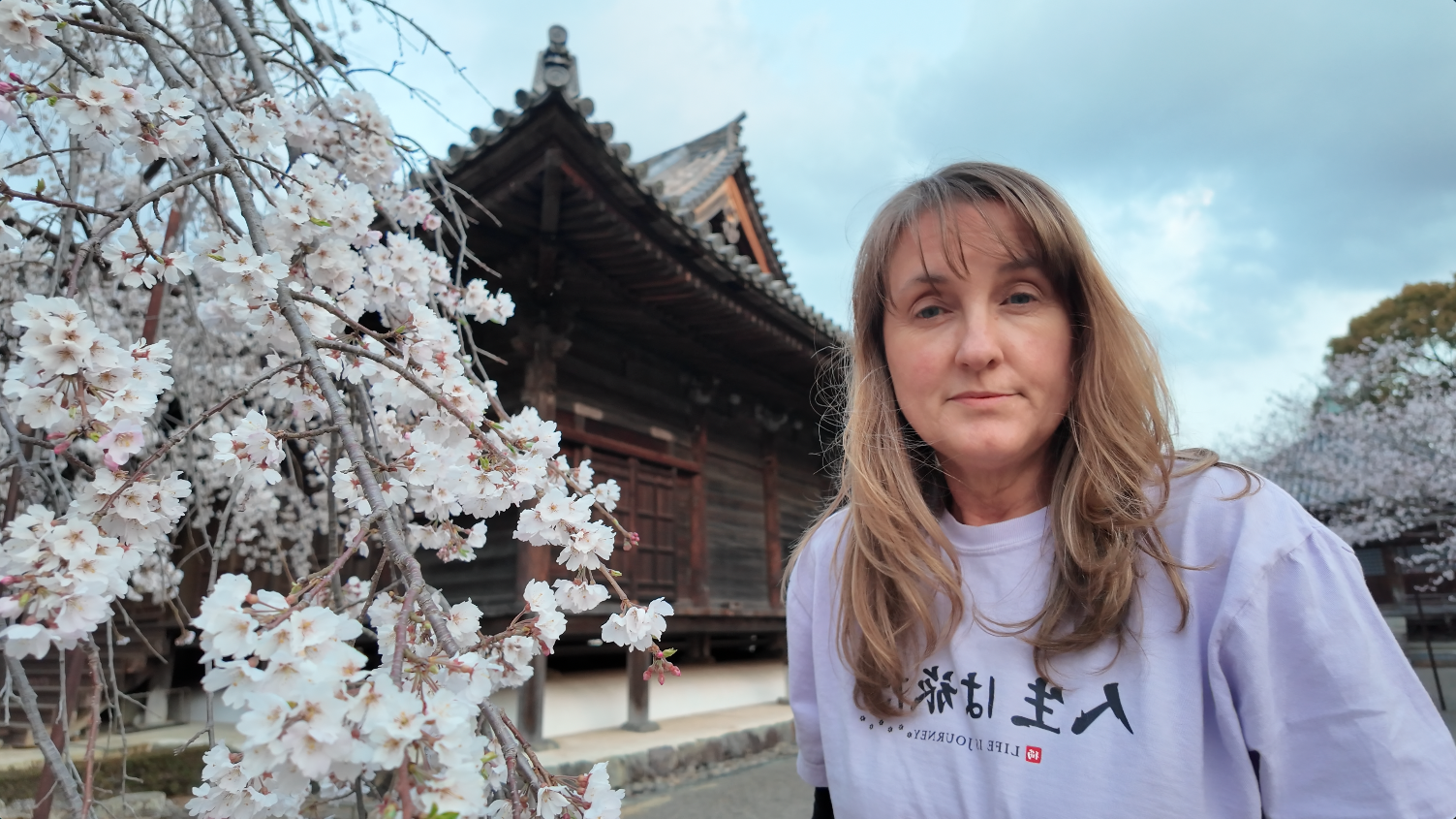
You’re surrounded by beauty — old wood, falling petals, stillness — and underneath it all is this story of obsession that refuses to fade.
Final Thought
The legend of Kiyohime endures because it doesn’t pretend emotions are neat or controlled. It shows what happens when they aren’t.
And that’s why, even after more than 1,300 years, people still remember her name.
How to Get to Dōjō-ji from Wakayama City
Getting to Dōjō-ji from Wakayama City is straightforward and makes for a good half-day trip.
By Train (recommended):
From Wakayama Station, take the JR Kisei Main Line (きのくに線 / Kinokuni Line) heading south toward Gobo or Shingū.
Get off at Dōjōji Station — the journey takes around 50–60 minutes.
From the station, it’s about a 5–10 minute walk to the temple.
By Car:
Driving takes about 1 hour from Wakayama City, depending on traffic. There is parking available near the temple, and the drive along the coast is actually quite scenic.
Tip:
If you can, time your visit for cherry blossom season. The contrast between the quiet temple grounds and the story behind it makes the experience far more memorable.
🌿 Postcard Club
If you enjoy these kinds of stories, I also share them through my Postcard Club.
Members receive a real postcard from Japan, along with little moments and local stories from places like this.
Each one is a small snapshot of life here — the quiet places, the history, and the everyday details you might otherwise miss.
If you’d like to join, you can sign up here:
👉 Join Here